TRCC News
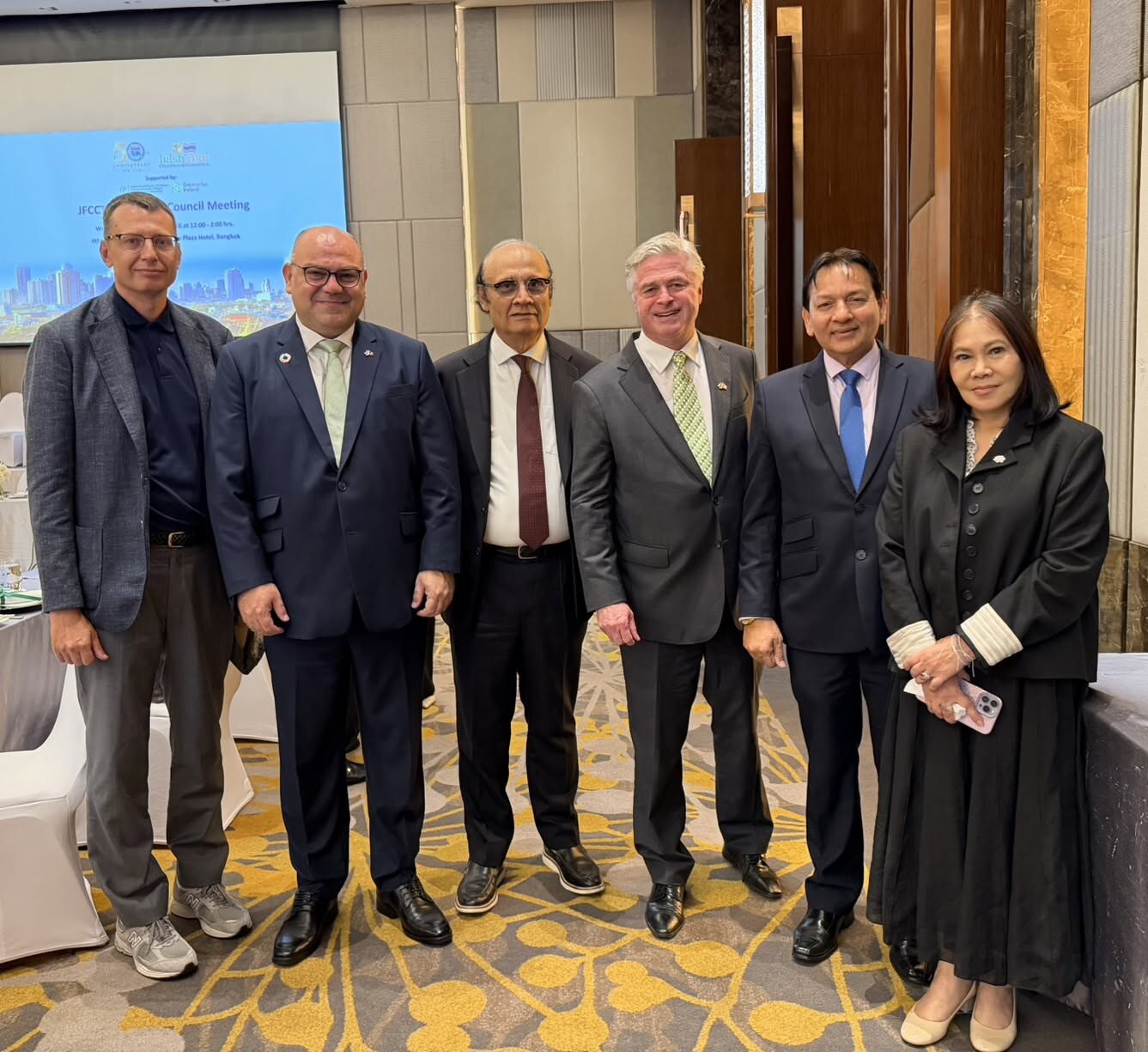
From investment to Thai silk: TRCC at the JFCCT Presidents’ Council
Hosted by the Irish-Thai Chamber of Commerce, the November luncheon connected business conditions with tourism, skills, sustainability and Thailand’s young entrepreneurs.
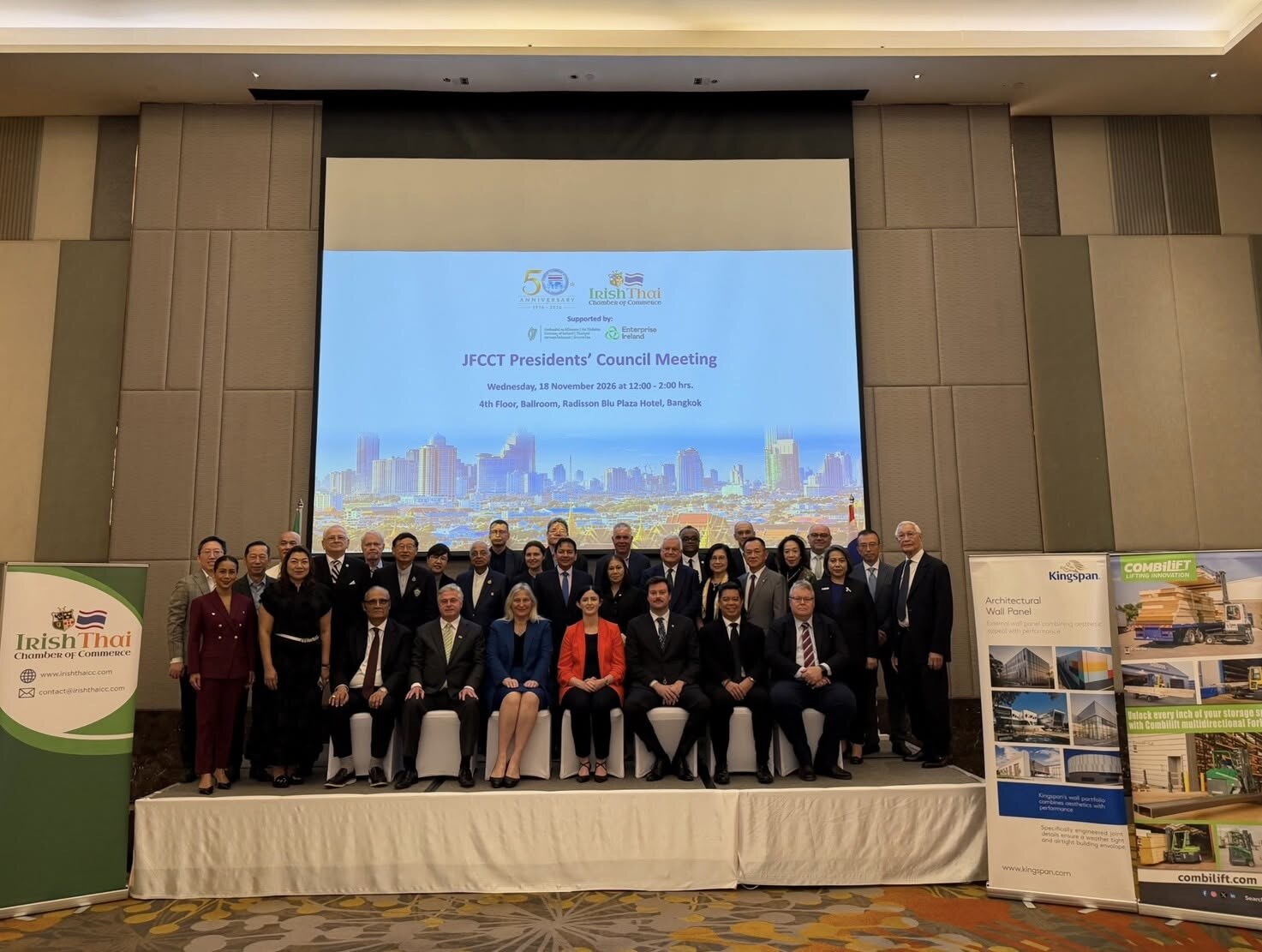
Across these subjects, speakers explored how to turn international connections into lasting opportunities. Their examples brought the discussion back to skilled people, clearer rules, access to finance and closer cooperation between chambers.
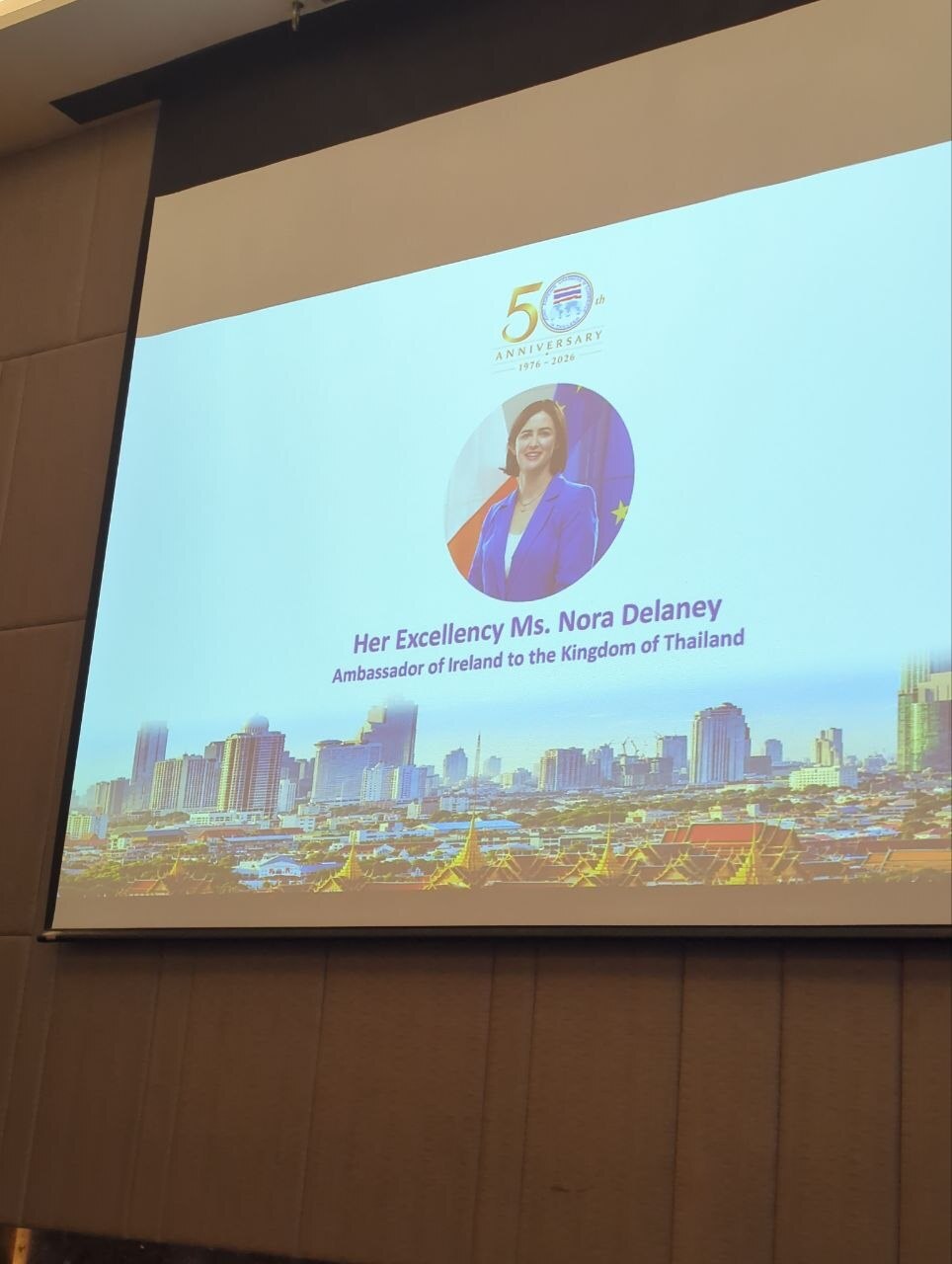
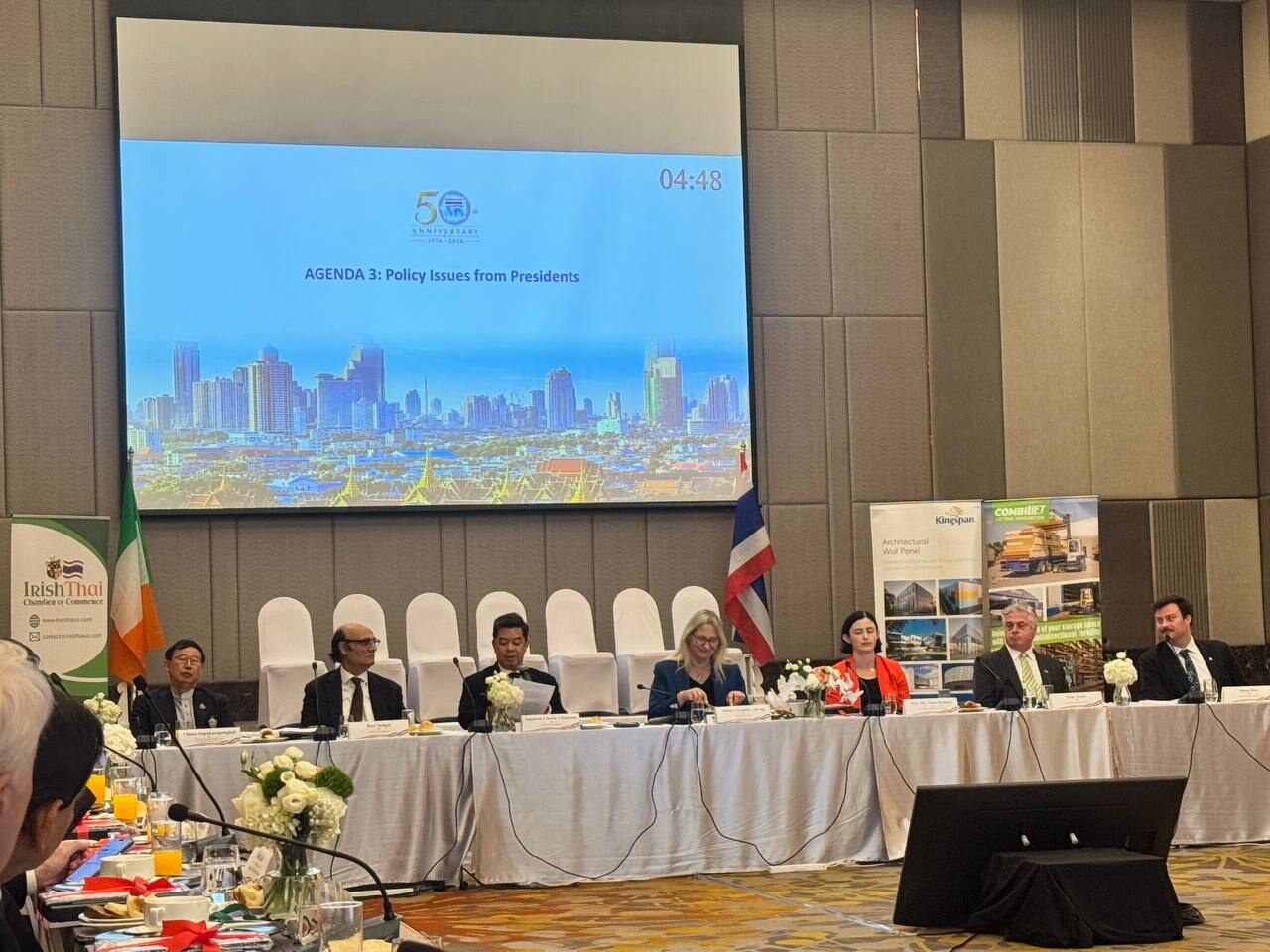
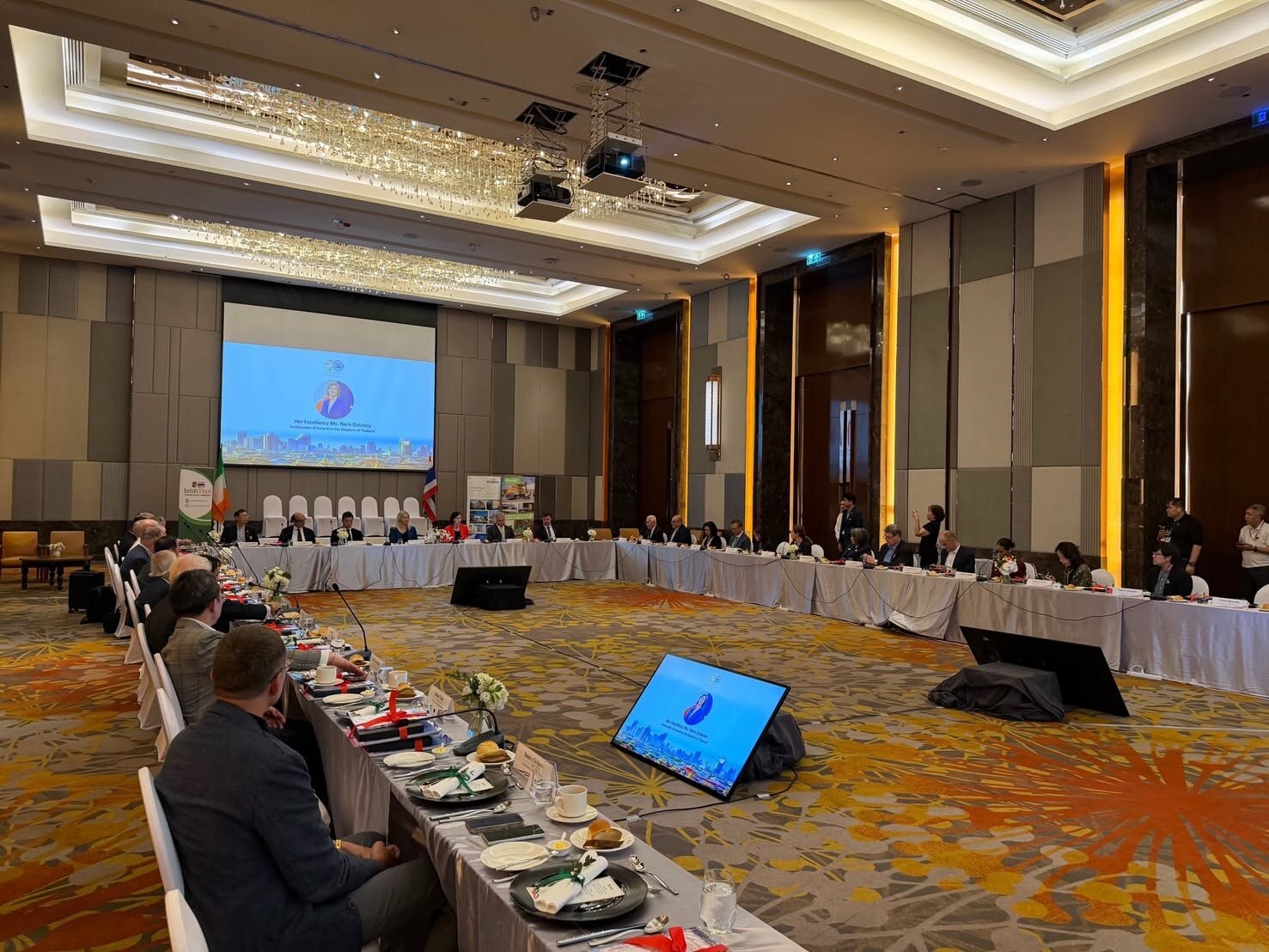
Paul Scales, Vice President of ITCC, welcomed participants and introduced the Irish contribution to the afternoon. H.E. Ms. Nora Delaney, Ambassador of Ireland to Thailand, delivered the opening address. JFCCT Chairwoman Vibeke Lyssand Leirvåg then led the Council’s working agenda.
Ireland’s message: openness needs practical support
Ambassador Delaney drew on Ireland’s experience of economic transformation to explain why openness matters to a country’s development. Education, skills and international engagement, she argued, work best when investors can also rely on efficient administration, infrastructure and predictable regulation.During Ireland’s Presidency of the Council of the European Union, she expressed support for an ambitious EU-Thailand free trade agreement. Her remarks covered customs procedures, services and investment as well as tariffs. The agreement remains under negotiation.
The ambassador also described how embassies and chambers can complement each other: combining diplomatic relationships and policy engagement with practical company experience to develop better-informed recommendations.
Thai silk, young designers and the people behind the fabric
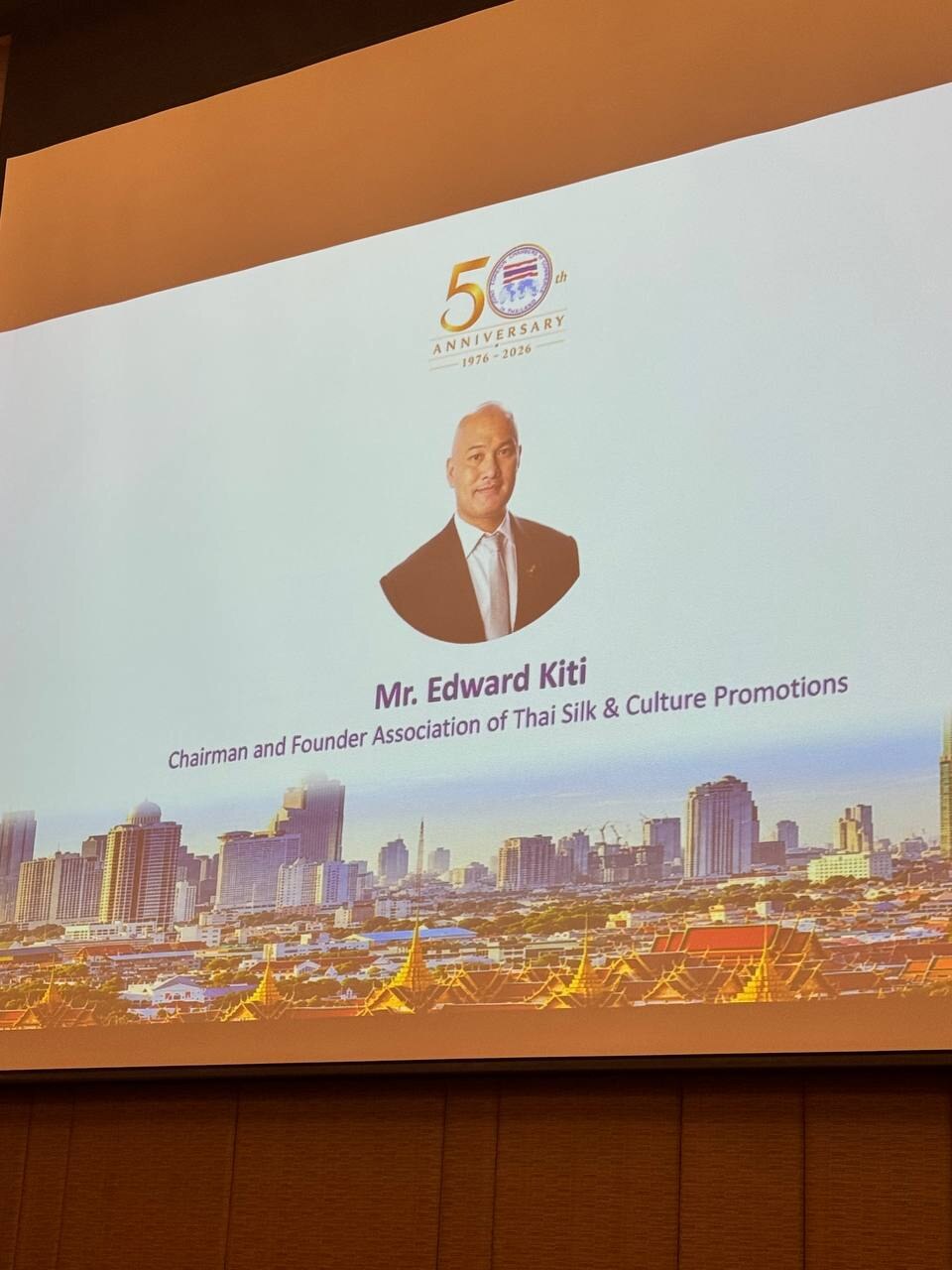
Edward Kiti, Chairman and Founder of the Association of Thai Silk & Culture Promotions, brought a different perspective to the business discussion. Presenting the Thai Silk Road to the World initiative, he invited foreign chambers to explore participation in its 2027 edition.His appeal centred on the people behind the fabric: weaving communities, silk producers and young designers learning their craft. He described work with educational institutions and the use of digital catalogues to connect Thai silk with wider audiences and markets. For chambers, participation could offer a way to support local livelihoods while sharing Thailand’s cultural heritage. The proposal was presented for further discussion.
Skills that connect education with work
The importance of human capability ran through the meeting. The Digital Economy/ICT report stressed critical thinking and skills development alongside the adoption of artificial intelligence, including practical support for smaller businesses. Technology, in this discussion, was valuable when people could use it effectively in their work.This emphasis connects with TRCC’s recent report on Agri-Food Talent Camp in Sisaket. That programme, supported by TRCC member Zeotech International and involving JFCCT’s Education & Skills Committee, brought students, educators and businesses together around agricultural skills and future employment. It provides a concrete example of the longer-term work behind the Council’s policy discussions.
A clearer operating environment for business
Vibeke Lyssand Leirvåg outlined plans to sharpen JFCCT’s policy priorities for 2027, with feedback from member chambers helping to guide the work. The aim was to focus on issues that matter to businesses and to Thailand’s competitiveness.The Digital Economy/ICT update also called for meaningful consultation with businesses as policies and regulations develop. Data centres, digital platforms and the wider investment environment were among the subjects raised. The emphasis was on rules that businesses can understand and plan around, together with opportunities for companies to contribute evidence before decisions are finalised.
SME discussions focused on access to finance and on gathering practical business cases to inform dialogue with financial institutions. Cooperation across committees, including work on AI capability, offered another route to helping smaller companies build capacity.
Trade discussions with a direct Thailand-Russia connection
The International Trade Committee reviewed issues affecting cross-border business, including freight conditions, market access, trade agreements and regulatory developments. The Board of Trade of Thailand’s update also looked back at the recent II Russian-Thai Investment Forum, connecting the Council’s wider agenda with a major platform for bilateral business cooperation.For TRCC members, these themes have an immediate practical dimension: how goods reach a market, what requirements must be met and where local support is available. Our report on Thai Logist’s comparison of Thailand-Russia freight routes at the forum offers a useful companion to this discussion, explaining why transfers and inland connections matter as much as the sea journey.
Tourism: the experience and cost of a visit
Andrew J. Wood, Chairman of the JFCCT Tourism Committee, focused on Thailand’s competitiveness as a destination. His update and the discussion that followed considered regional competition, the cost of travel, ease of access and the experience visitors receive. He also encouraged wider chamber participation and the sharing of market intelligence.The issues reach beyond hotels and tour operators. Transport, services, local businesses and the overall experience of arriving in Thailand all influence whether visitors choose to come and return. This work follows TRCC’s participation in the Tourism Committee meeting on 13 November, where members examined priorities for Thailand’s 2027 visitor economy.
Sustainability starts with what members need
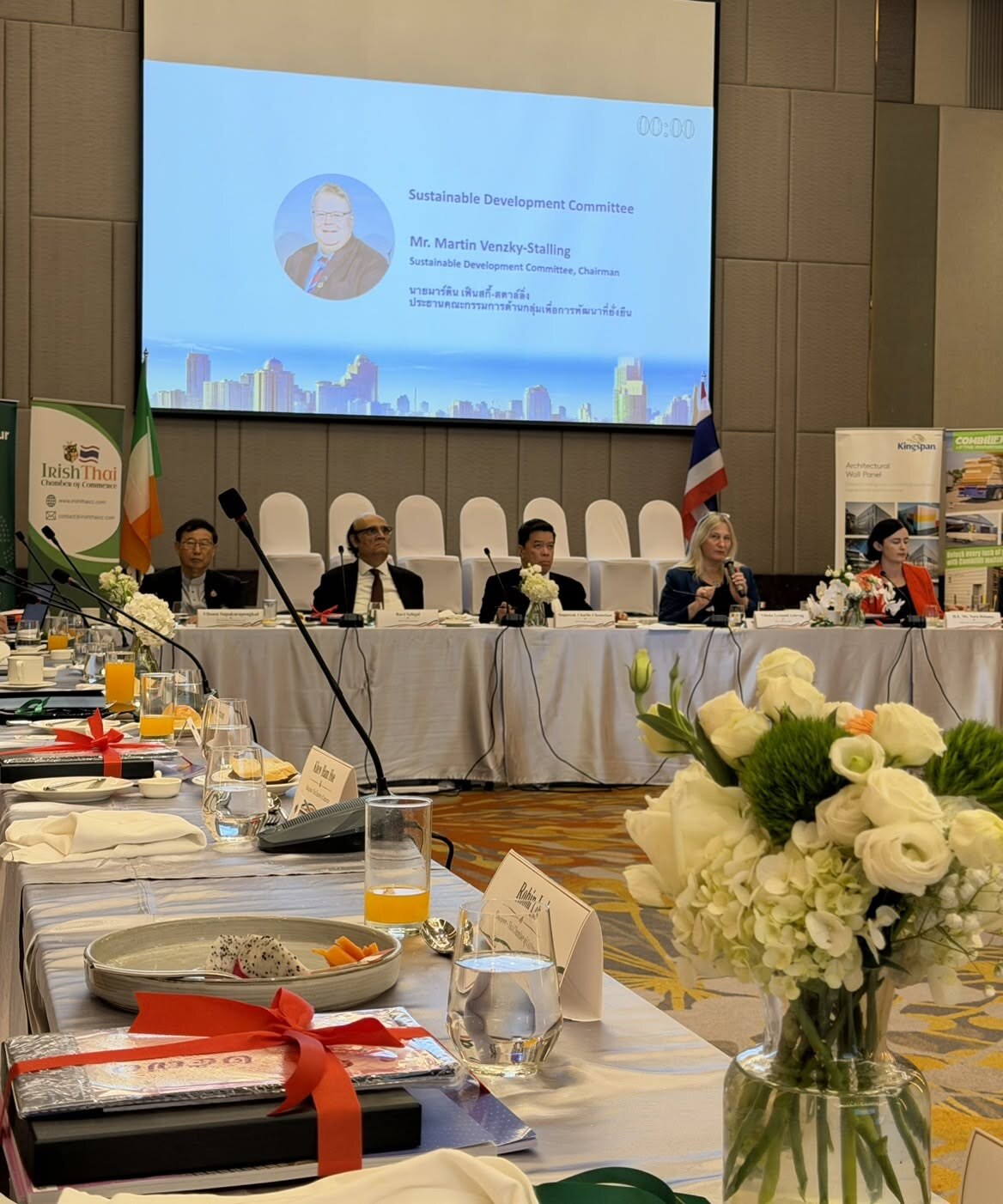
Martin Venzky-Stalling, Chairman of the Sustainable Development Committee, turned his update into a live conversation by asking participants to respond to questions on their phones. The exercise invited chambers to identify the sustainability issues that mattered most to their members.Energy costs and access to clean electricity, environmental reporting, customer requirements, climate resilience and finance for the transition were among the topics put to the room. Participants were also invited to suggest subjects for future committee work. The format made a practical point: a useful sustainability agenda needs to reflect the pressures businesses face, as well as the opportunities they can help create.
A next step with Thailand’s young entrepreneurs
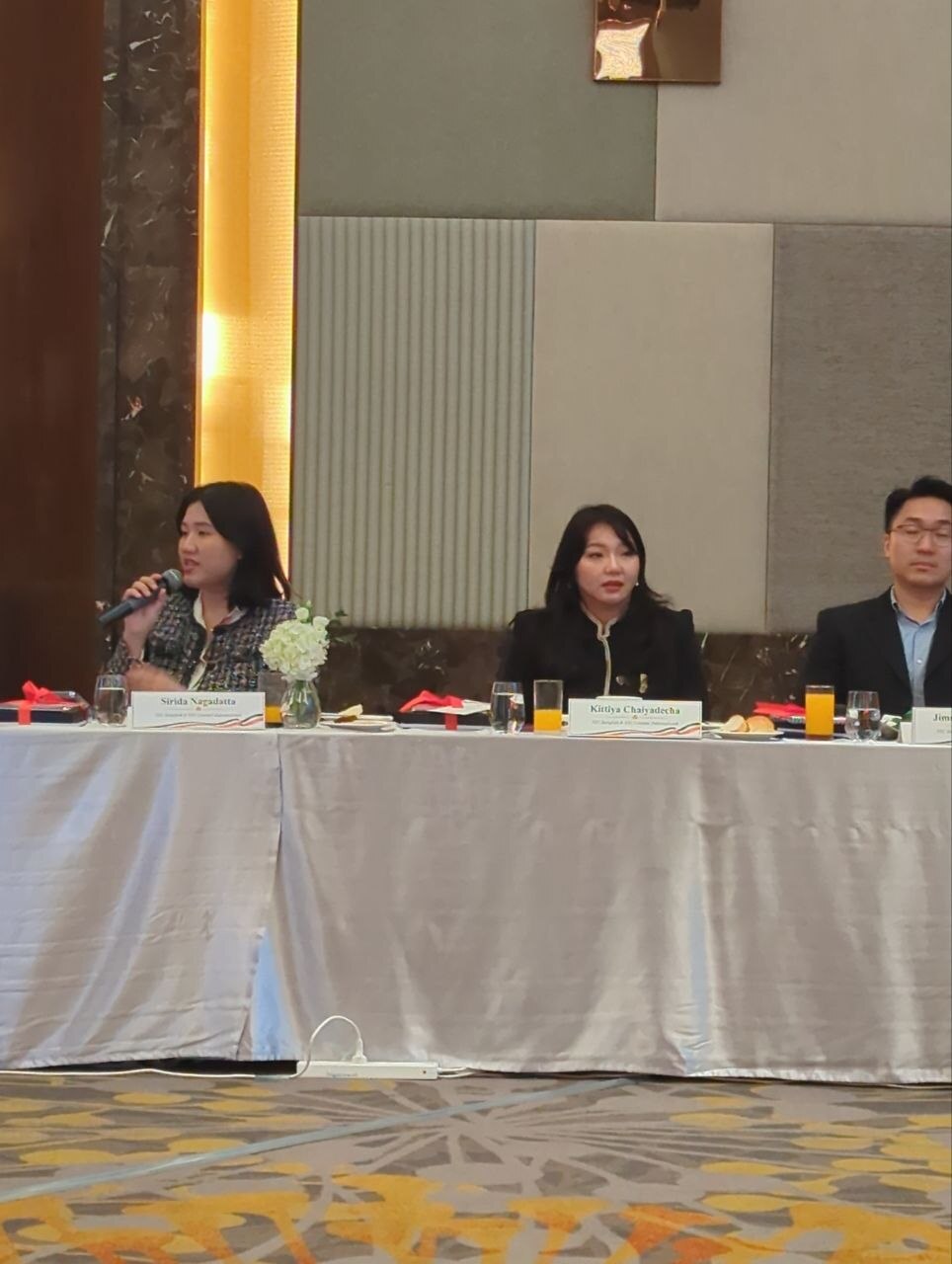
The Young Entrepreneur Chamber of Commerce (YEC) team presented a direct opportunity for further contact. Sirida Nagadatta, Kittiya Chaiyadecha and Jimmy Tarndamrong introduced YEC’s network and its work connecting Thai entrepreneurs with the international chamber community. Paul Scales also outlined the collaboration with JFCCT.The next meeting point is YEC Thailand × JFCCT Business Speed Networking on 27 November 2026 at Glowfish Plaza Sathorn. The event is designed around focused business conversations, giving participants a structured way to meet potential partners and continue discussions afterwards. The TRCC event page provides the programme and registration information.
Keeping the conversation connected
The value of the Council meeting lay in bringing these subjects into the same room. Investment conditions, skills, tourism, sustainability and the needs of smaller companies are closely connected; progress in one area can support the others.For TRCC, participation continues its engagement with the foreign chamber network and with local business organisations. It follows earlier JFCCT Council participation and recent engagement at Pakistan Business Connect 2026. These contacts help the Chamber stay informed about shared business concerns and identify opportunities relevant to cooperation between Thailand and Russia.
TRCC thanks the Irish-Thai Chamber of Commerce for hosting the luncheon, and JFCCT, the speakers and participating chambers for the exchange.
Sources and photo credits
Report based on the supplied meeting agenda, recordings and presentation photographs. Background checked against JFCCT, ITCC, the Government of Ireland and the European Commission’s information on Ireland’s EU Council Presidency and EU-Thailand trade negotiations. Related TRCC reports and events are linked in the text. Speeches are paraphrased. Event photographs supplied to TRCC.Event details, registration and documents
Partner Event Joint Foreign Chambers of Commerce in Thailand (JFCCT)
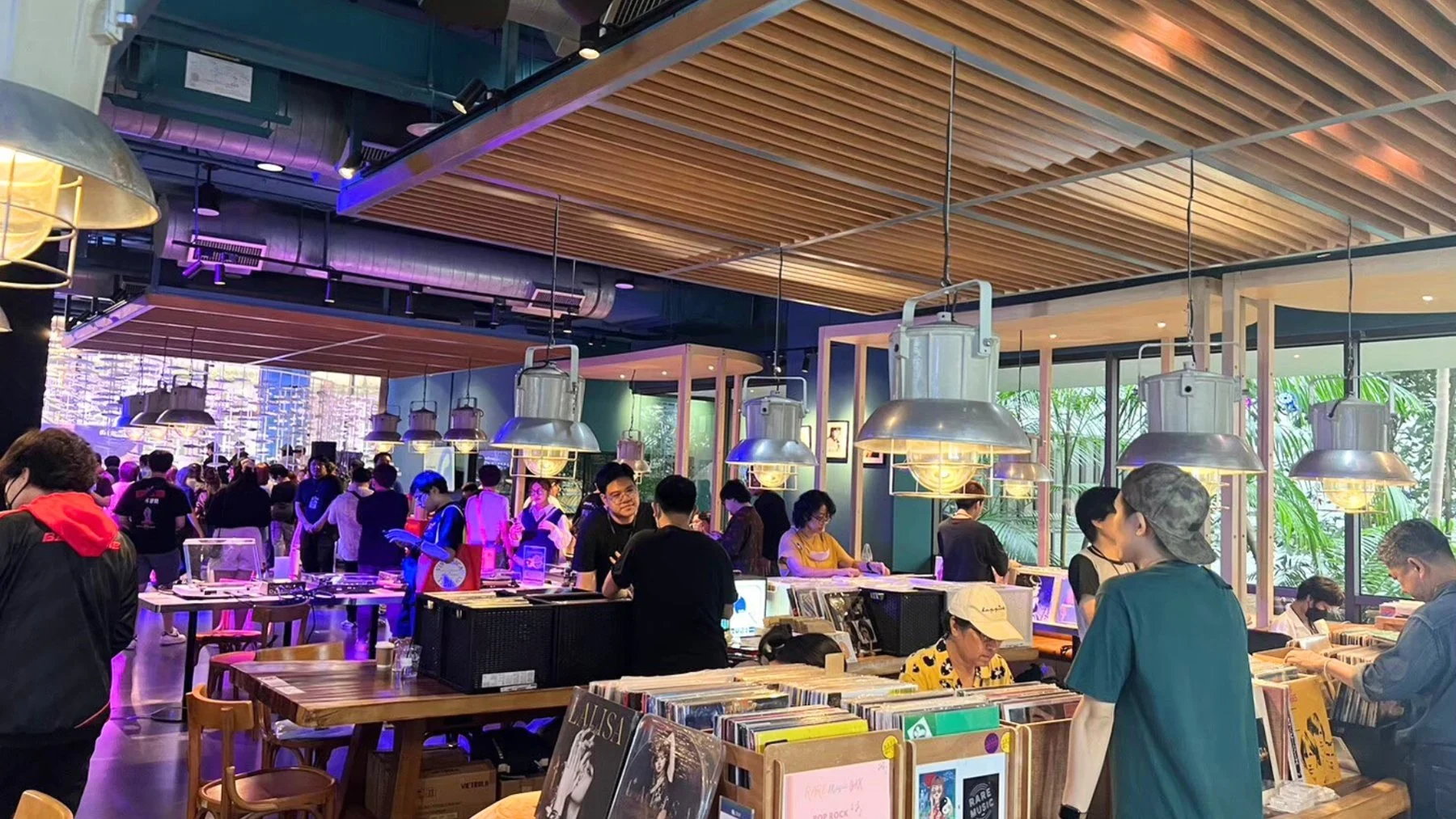
YEC Thailand × JFCCT Business Speed Networking
Connect with Thai entrepreneurs and international chamber members through focused one-to-one conversations and business matching. Participation: THB 500 per person.
View event