TRCC News
Vitaly Kiselev outlines practical priorities for Russia–Thailand business cooperation
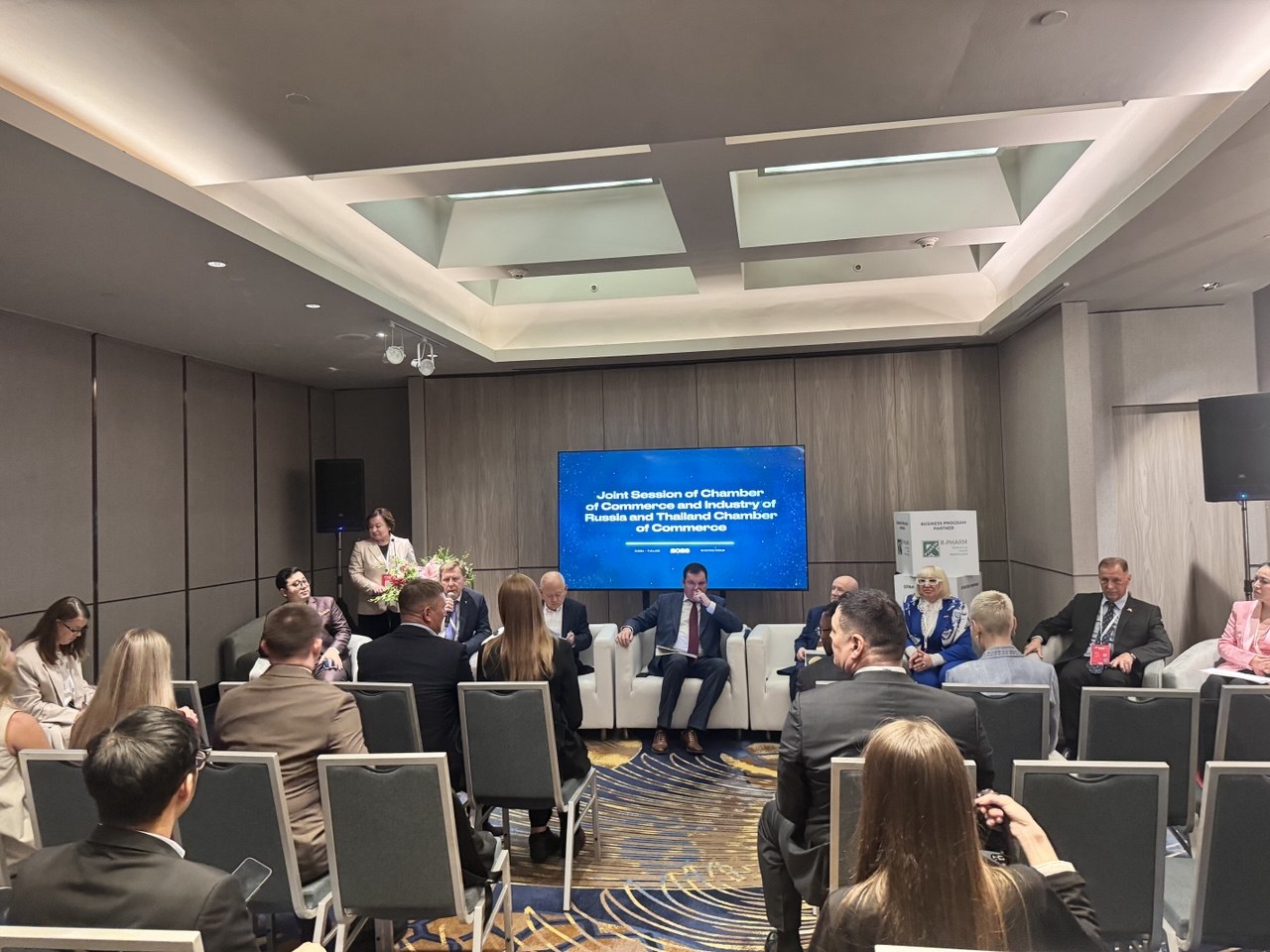
At RTIF 2026 in Bangkok, TRCC President Vitaly Kiselev discussed trade performance, agricultural and technology partnerships, and practical support for businesses.
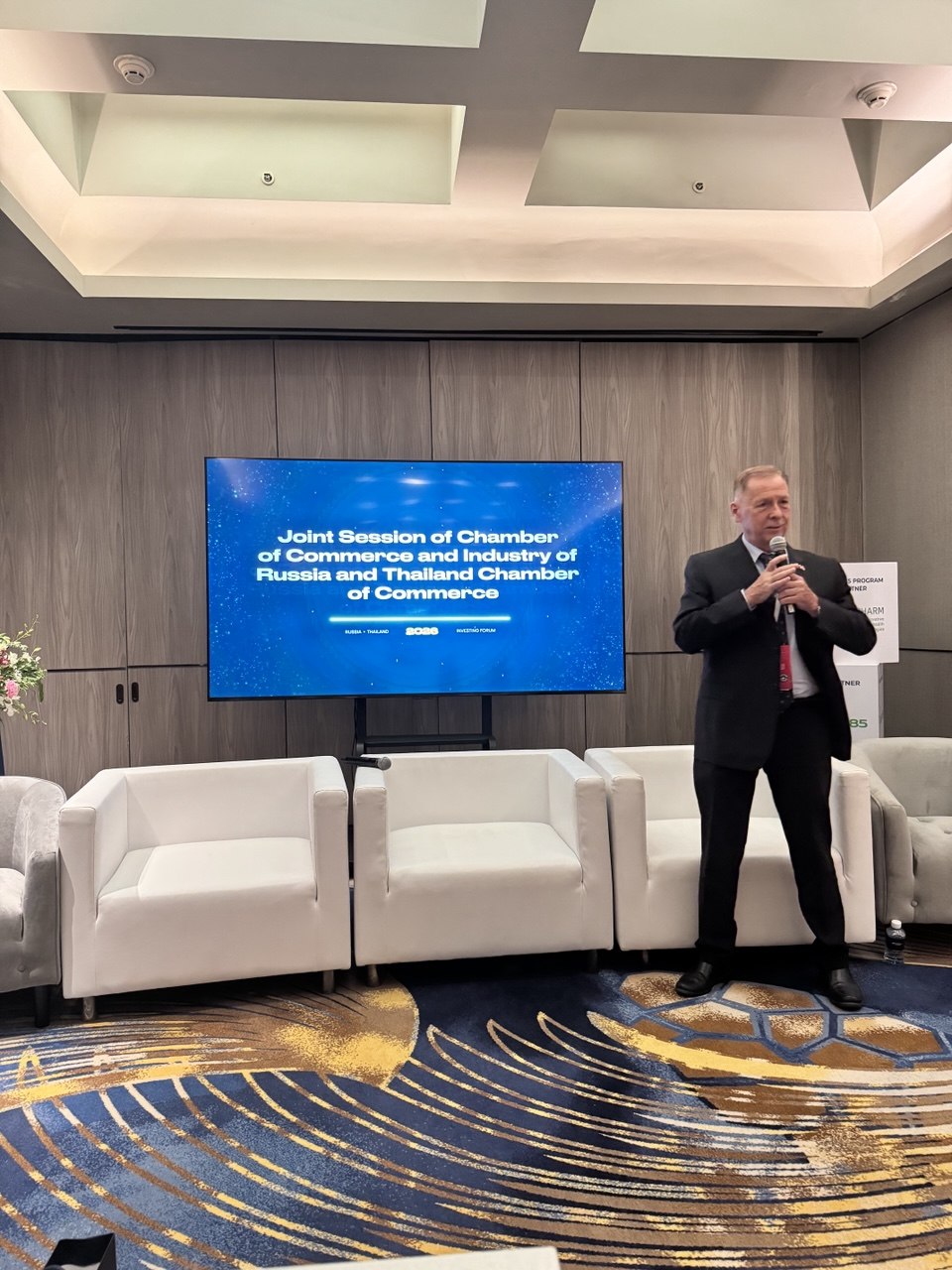
Trade performance and new opportunities
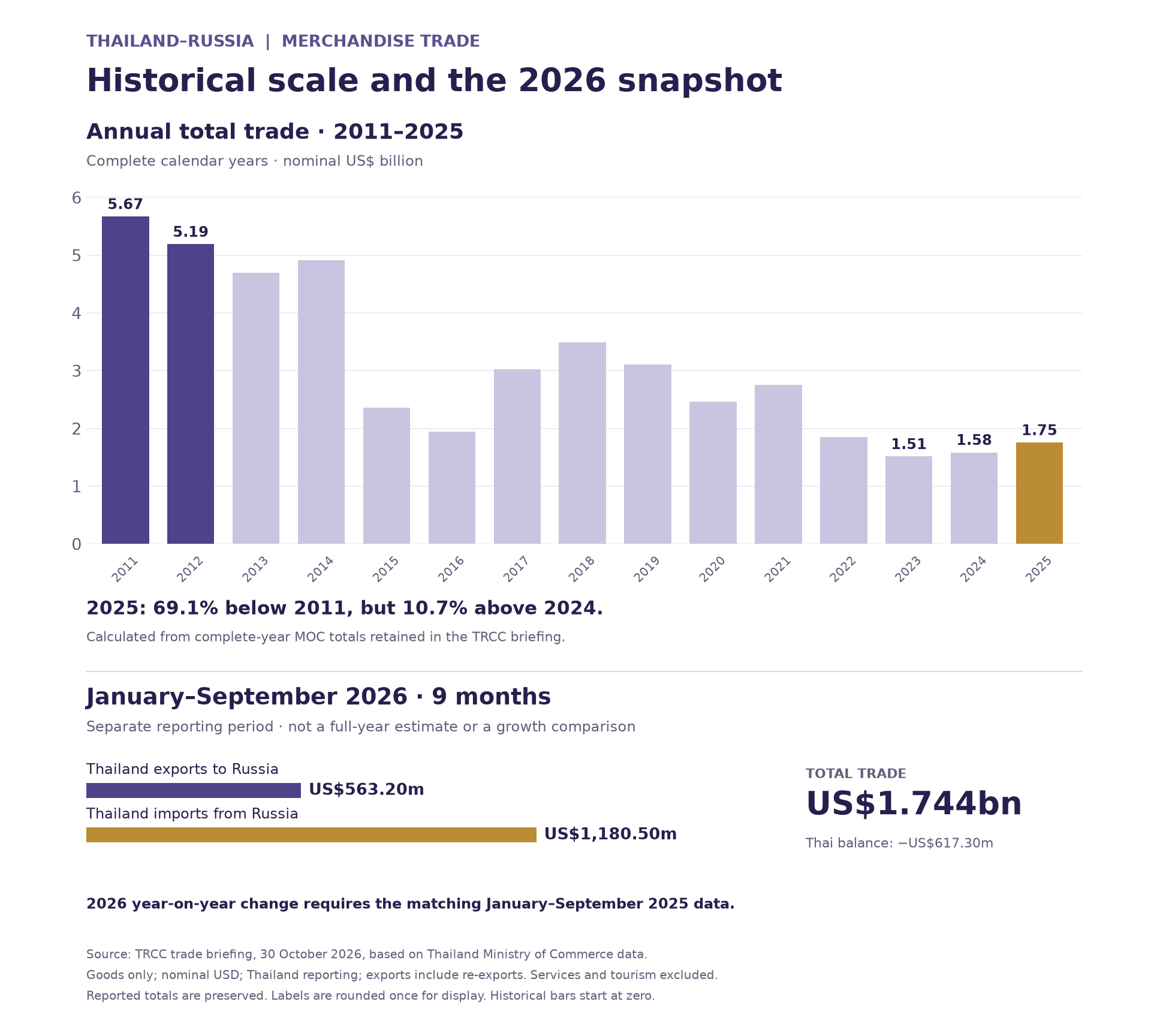
Recalling earlier trade levels, Kiselev cautioned against judging recent growth in isolation. The TRCC trade briefing records full-year bilateral merchandise trade of US$5.67 billion in 2011, the highest annual total in its 1993–2025 series, and US$5.19 billion in 2012.The same series records full-year trade of US$1.754 billion in 2025, around 69% below the 2011 peak but 10.7% above 2024. This shows a substantial gap from earlier levels alongside a recovery in the latest complete year. The January–September 2026 result is presented separately because it covers nine months.
Russia–Thailand merchandise trade: 2011 and 2012
2011 – 2012 · USD · Thailand reporting
Thailand exports to RUSSIAN FEDERATION
Thailand imports from RUSSIAN FEDERATION
USD · M = million · B = billion · K = thousand
Exact annual values and changes · USD
| Period | Thailand exports to RUSSIAN FEDERATION | Thailand imports from RUSSIAN FEDERATION | MOC-reported total trade | Thailand balance |
|---|---|---|---|---|
| 2011 | 1,149,510,655.7568 | 4,518,994,307.235 | 5,668,504,962.9918 | -3,369,483,651.4782 |
| 2012 | 1,132,821,856.0522−1.5% | 4,056,187,191.0243−10.2% | 5,189,009,047.0765−8.5% | -2,923,365,334.9721+446,118,316.51 USD |
Source: Information and Communication Technology Center with cooperation of the Customs Department (MOC Thailand Trade Report). TRCC statistics for this selection.
Merchandise trade only. Exports include re-exports. Prepared values stay fixed; provisional source data may later be revised.
Method and data notes
Exports include re-exports. Prepared values stay fixed; provisional source data may later be revised.
Changes compare consecutive calendar years or the same YTD cutoff. Balance changes are absolute currency amounts. No comparison is shown without a selected comparable baseline.
Kiselev drew attention to the imbalance between the two trade flows and the concentration of Russian supplies in raw materials and related products. He expressed concern about Thai export performance and argued that price competition from Vietnamese agricultural products was an important challenge for Thai exporters.
He stressed that these difficulties were no reason for pessimism. Digital technologies and agricultural cooperation offered opportunities for new projects, including localising agricultural activities in Thailand. Referring to the Ryazan delegation’s presentation on fertilisers, he encouraged businesses to explore cooperation beyond buying and selling goods.
Practical support from TRCC
Kiselev outlined TRCC’s role in helping companies enter the Thai market and address practical difficulties, including cross-border payments. He said the chamber had around 80 members, divided roughly equally between Thai companies working with or interested in Russia and companies with Russian participation operating in Thailand. Its new committee for small and medium-sized enterprises is intended to help new members develop their businesses and navigate licensing requirements. He also highlighted the opening of TRCC’s representative office in Phuket.Project priorities raised by other speakers
Agri-food cooperation
Dr. Chanintr Chalisarapong, Vice President of the Thai Chamber of Commerce and Chairman of its International Trade Development Committee, proposed combining Russian agricultural supplies with Thailand’s food-processing capacity and access to global markets. He urged both sides to work towards US$1 billion in bilateral agri-food trade within three years, with lower tariffs and fewer technical barriers supporting that ambition.Technology and industrial partnerships
Vladimir Platonov, President of the Moscow Chamber of Commerce and Industry, presented digital city services, healthcare systems and other technologies as areas for cooperation. Lyudmila Kozlova, President of the Ryazan Chamber of Commerce and Industry, outlined industrial and investment opportunities, alongside chamber support through business missions, targeted B2B meetings and partner verification.Regional links and market access
Boris Stupnitsky, President of the Chamber of Commerce and Industry of Primorsky Krai, highlighted logistics links and proposed an agreement with a Thai regional chamber, preferably Phuket. Kongsak Khoopongsakorn, Chairman of the Phuket Chamber of Commerce, presented the island’s development priorities in tourism, gastronomy, healthcare and education, together with opportunities to strengthen regional ties with Russia.Duong Thu Huong, Chairwoman of the Thai-Vietnam Chamber of Commerce, called for stronger Russia–Thailand–Vietnam connections, qualified partners and concrete projects, with results measured by partnerships and projects delivered. Aung Ko Ko Oo, Executive Director of the Myanmar Digital Economy Association, recommended Thailand as a base for ASEAN expansion and emphasised finding partners able to help with registration, certification, logistics and regulatory requirements.
Karel de Lange, Chairman of the Board of the South African-Thai Chamber of Commerce, emphasised the role of business relationships in supporting peaceful international cooperation and mutual respect between cultures.
Taken together, the remarks highlighted opportunities in agricultural cooperation, food processing and technology. Turning these ideas into workable projects will require reliable payments, efficient logistics, clear regulatory requirements and suitable business partners.
Kiselev concluded by stressing the forum’s value in building mutual understanding and new partnerships, and invited companies with questions about doing business in Thailand to contact TRCC.
About the II Russian–Thai Investment Forum 2026
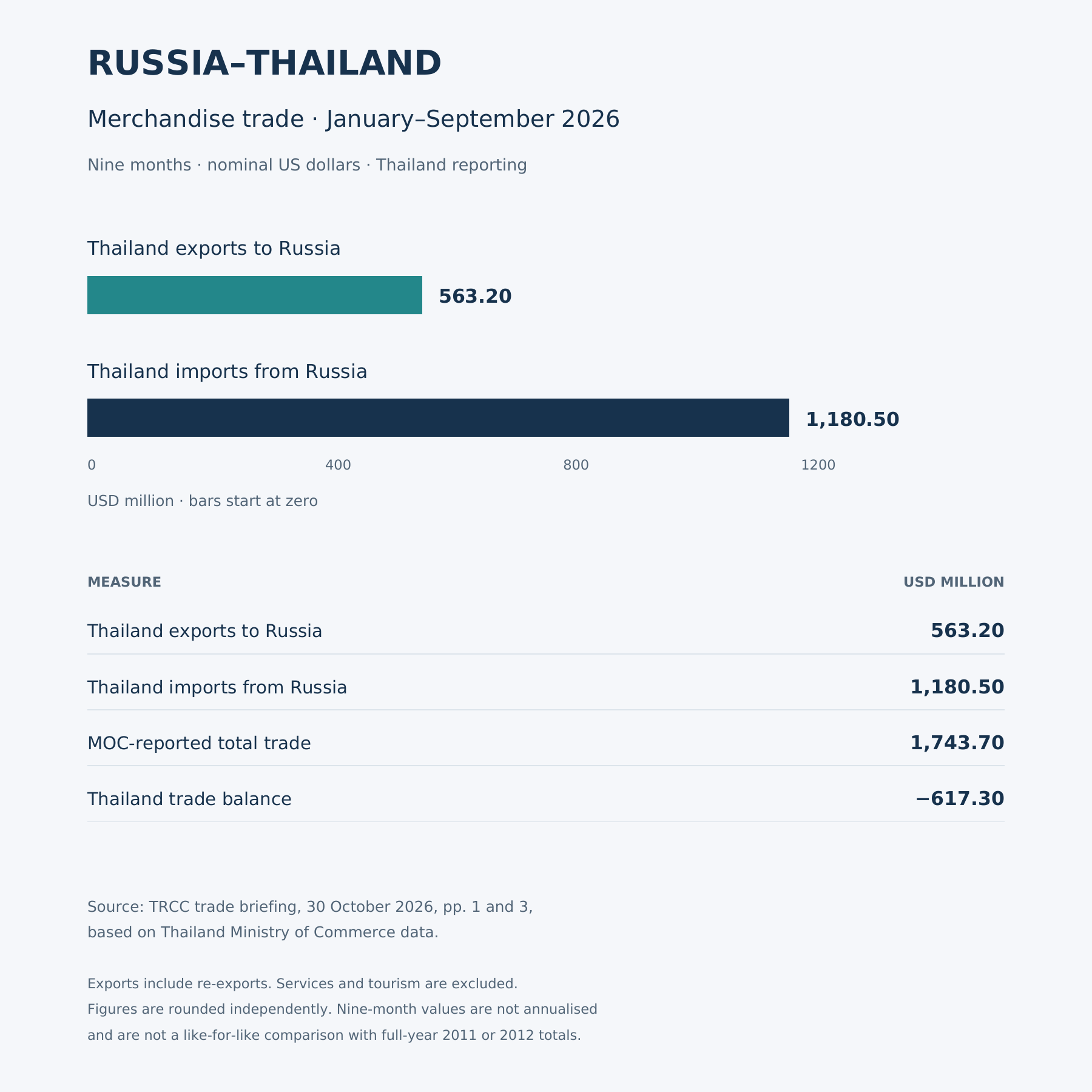
About the trade figures
Source: TRCC merchandise trade briefing dated 30 October 2026, based on Thailand Ministry of Commerce data. Historical totals cover complete calendar years; 2026 figures cover January–September. These are merchandise trade figures in nominal US dollars, recorded from Thailand’s perspective. Exports include re-exports. Services and tourism are excluded. The changes of around −69% from 2011 and +10.7% from 2024 are calculated by TRCC from the source’s complete-year totals for 2025 and the respective comparison year. The annual totals and nine-month figures are not used to calculate a like-for-like growth rate. A 2026 year-on-year assessment requires the corresponding January–September 2025 figures. The agri-food target stated by Dr. Chanintr is his proposal, not a recorded trade result.Event details, registration and documents
Partner Event Russian-Thai Business Council (RTBC)
From to — Time TBA
II Russian–Thai Investment Forum 2026
Event time is not yet confirmed
The II Russian–Thai Investment Forum brings companies, institutions and business associations from Russia and Thailand together in Bangkok for three days of investment dialogue, …
View eventMedia
Photo Gallery